How creative became the decisive variable in paid social advertising
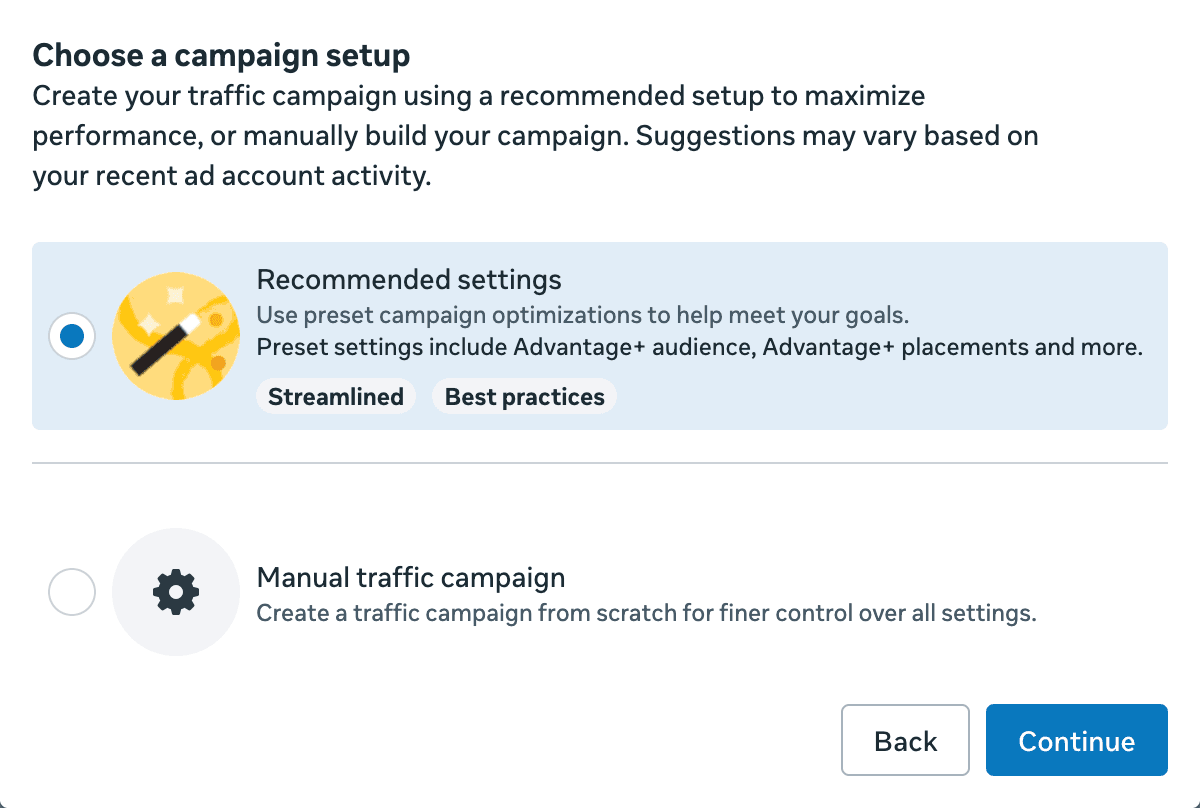
Open Ads Manager today and start a campaign. The recommended setup is chosen for you, with Advantage+ audience on by default inside it; your own targeting, if you add any, goes in a box marked “optional.” That’s the audience screen now.
Rewind to 2018, though, and that same screen held one of the most precise targeting instruments ever built: tens of thousands of interests and behaviours to include, exclude, and layer; a tool that told you what any audience cared about, right down to the pages they followed; lookalikes built from your best customers. You could define a narrow, high-intent audience and reach it in full. That instrument has been dismantled, piece by piece, ever since — and while every removal made noise, the noise was about the immediate pain.
But the pain wasn’t the story — the arena was. That small screen sits at the centre of the biggest game in advertising: search, which two decades ago practically was digital advertising, now accounts for under half of it, while most of the money has moved to visual, creative-led formats. This year, for the first time in the history of digital advertising, Meta is projected to overtake Google as the world’s largest digital-ad business — $243 billion to $240 billion on eMarketer’s numbers, its ad revenue growing at roughly twice Google’s rate. The centre of gravity is shifting from the search box to the feed, from intent to attention. And underneath that shift is a smaller, sharper one: a change in which part of the job actually decides whether your ads work.
The game used to be the media buy
For most of its life, performance advertising put its skill into the media buy — the targeting and the bidding. Not because that was the only thing that mattered, but because it was the thing you could measure and modify. Audiences could be split and tested, bids tuned to the decimal, results read off a dashboard the next morning. The media buy was legible, and so it was where the rigour went.
Creative was never less important. A great ad and a poor one, run to the same people, could return wildly different results — every operator knew it. You could see that an ad worked, from its click-through or its watch time. What you couldn’t easily see was why: it wasn’t easy to break a creative into its elements and measure them the way you could measure an audience. So creative sat outside the instruments. It mattered as much as anything, but got optimised least of all — the one lever the measurement culture couldn’t get a reading on.
That arrangement held as long as the media buy stayed both measurable and modifiable. It no longer is — on either count.
Apple’s 2021 privacy changes were the first blow, starving the data that made interest and lookalike targeting sharp. Then, in January 2022, Meta pulled thousands of targeting options off the table — health, race, religion, politics, sexual orientation — under years of pressure over discrimination; two years later, it cut more. And in August 2023, automation became the default: Advantage+ audience treats whatever you type as a suggestion, then reaches as broad as it likes.
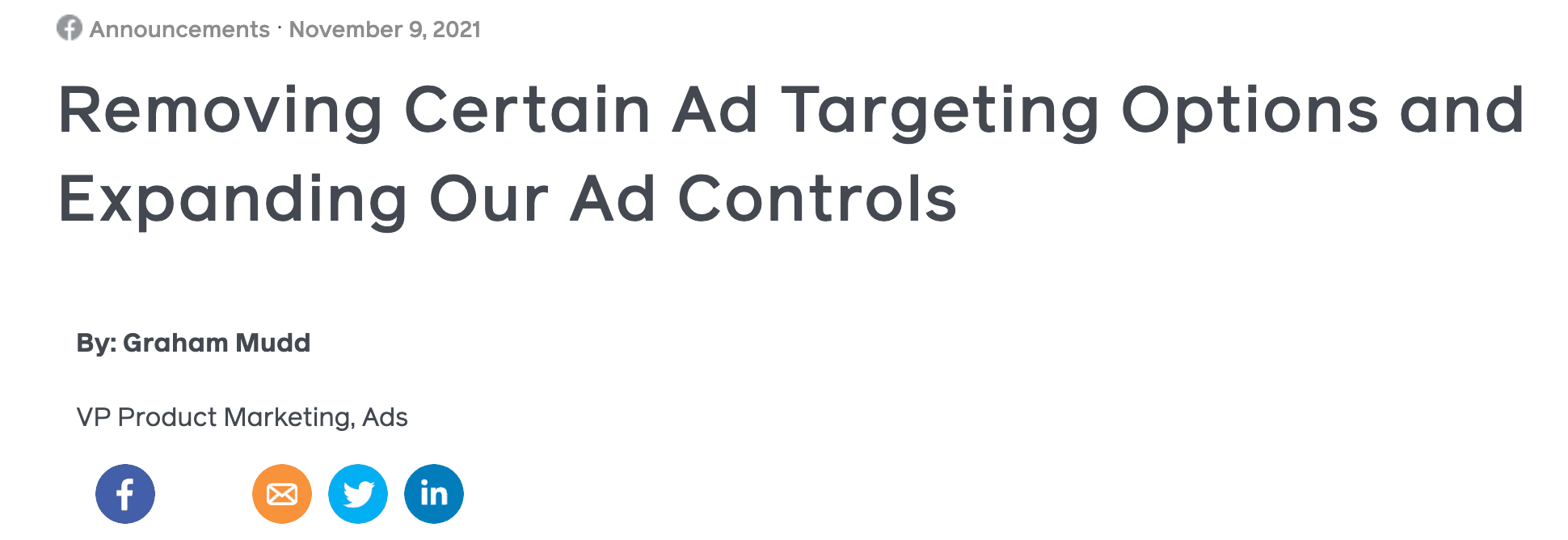
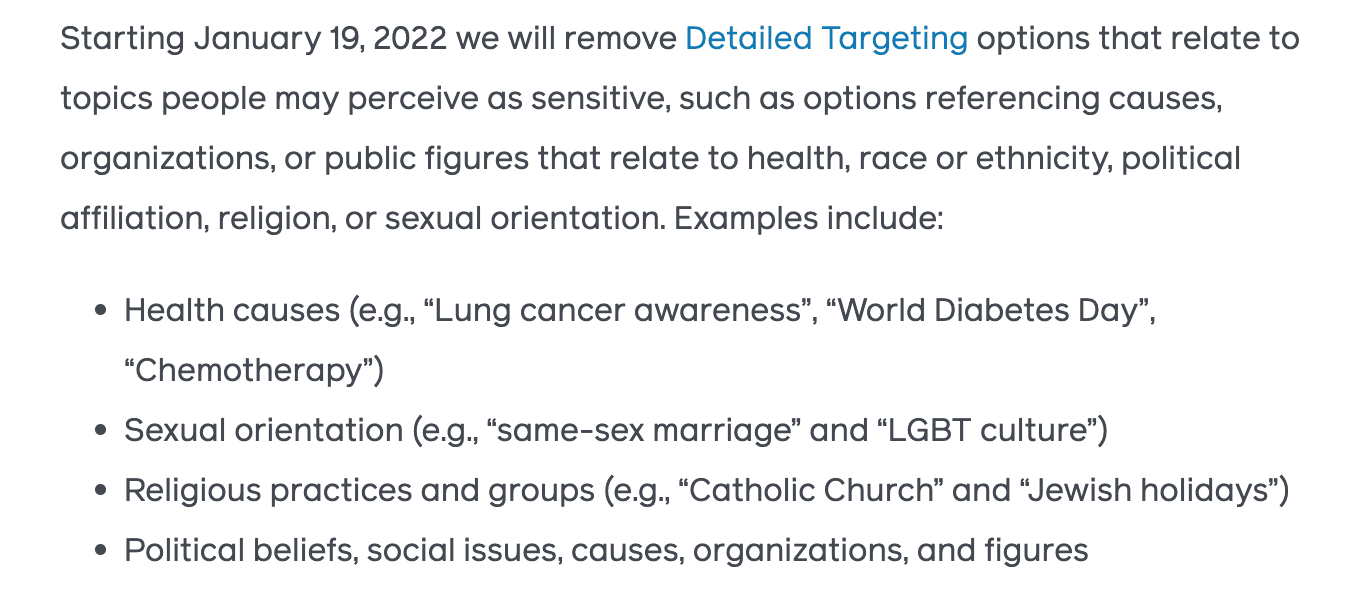
You can still target by hand — but it’s buried, it’s discouraged, and the list of options keeps shrinking, while the default pulls the other way. In practice, for the overwhelming majority, it’s gone. Even Jon Loomer, who has built a career telling marketers to calm down about these changes, calls it a real loss of control. None of this is unique to Meta: Google has hollowed out manual control in search the same way.
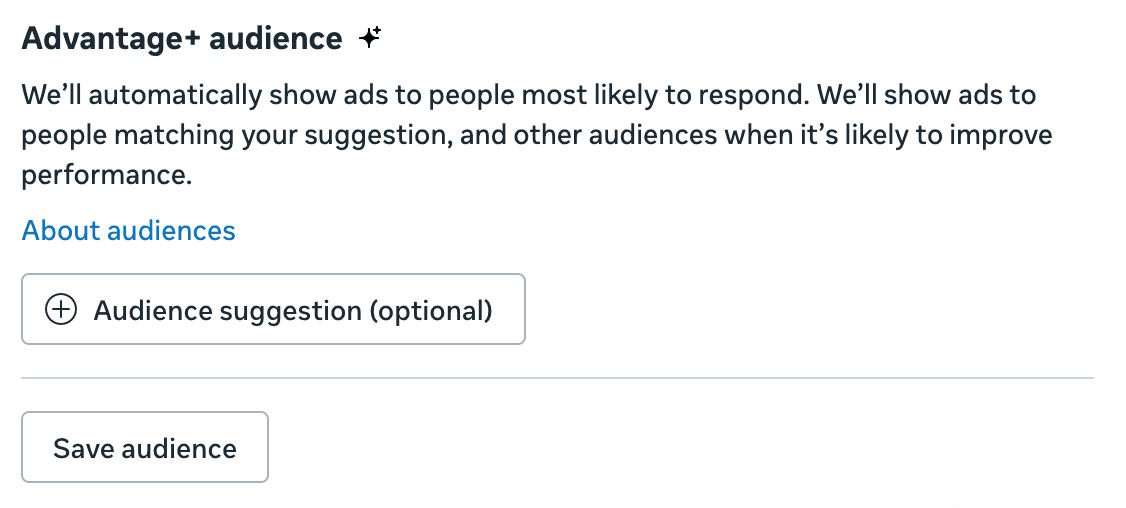
This is how the media buy lost the first of its two properties: it’s no longer legible. You feed the machine a goal and it decides who to reach; the levers you used to pull are inside the black box now. And it lost its second property too. Modifying it used to create an edge; now that everyone runs the same broad default, there’s little room left to do targeting brilliantly or badly — the automated baseline is good enough that what used to take a specialist now comes as the default.
Which leaves exactly one lever that still moves the result — and it’s the one nobody ever learned to read.
Now it’s the creative
The one input still fully in your hands had been moving the number materially all along; only now, with the noise around it settled, does its impact show clearly. Looked at head-on, the size of the effect is startling.
Hold everything else fixed — one account, one placement, one broad audience, the same campaign — so the only thing changing between ads is the creative.
Two ads, one context. The only thing different is the creative.
BEST CREATIVE
≈ 10× the worstInstagram Reels · App Promotion · Broad Targeting · same campaign. Metric: 15-second Video Through-Play Rate.
Real, anonymized account — one example of the spread creative can produce, not a performance guarantee.
everything the platform controls held constant; only the creative varies. The gap between the best ad and the worst is more than tenfold, in the metric that decides how far the budget goes.
The weakest video held 0.9% of viewers to the fifteen-second mark. The strongest held 9.5%. A more-than-tenfold gap — same audience, same budget, same everything the platform controls — in the number that decides how far your money goes. When targeting is automated and much the same for everyone, creative isn’t the tie-breaker at the margin; it’s the whole range, and all of it sits in the part of the job that got the least scrutiny of all. (Which parts of the best creative actually drove that gap is the real question — and the hard one. For another day.)
The one thing nobody learned to read
Here’s the catch. The variable that now decides everything is the one performance never learned to handle. Not that anyone ignored the creative — people talked about it endlessly. But a creative is a dense stack of choices — the pace, who’s on screen and how they carry it, the setting, what’s shown versus said, how long it holds before the turn — and what most everyone did was reach into that stack, pull out whichever few elements were in vogue that season (this year’s format, last year’s trending edit), declare those the things that mattered, and wave off the rest. Not from evidence — from fashion. And the few that did get scrutinised were scrutinised badly: no test of statistical significance, no check that the pattern held across time, no account of the dozen other things that changed alongside.
None of that got caught, because the noise upstream hid it. When results swung wildly on the targeting and the bidding, a weak read on the creative never had to answer for itself — a bad week could always be pinned on the audience or the auction. Guessing at the creative carried no cost, so nobody had reason to stop.
That worked until the upstream noise went quiet. Now the creative is what moves the number, in plain view — and it’s the one lever with no off-the-shelf way to improve it. Targeting had a clear route: test, refine, read the numbers, adjust. Creative has no equivalent a team can just pick up. Most have no reliable way to take a creative apart, work out which of its choices actually move performance, and get better on that basis. The thing that now decides the outcome is the thing nobody was ever equipped to improve — not because it can’t be done, but because the method for doing it isn’t lying around.
You can see it in any creative review: the same inputs as a decade ago — a competitor’s ad someone screenshotted, last quarter’s winner, a reference the founder liked, whoever argues most confidently — now with a smattering of numbers on top to make the call look measured. Which is worse than no numbers at all: it’s a hunch wearing the costume of evidence.
And it’s only getting harder. The feed fills up more every year — now with a rising tide of AI-generated filler produced at almost no cost — and reach per post keeps slipping even as posting climbs. Your ad competes with everything in the scroll, not just other ads, and the bar for stopping a thumb rises every year.
The open problem
Which is, to me, the most interesting problem in performance marketing right now. The variable that decides paid social is the creative — the one we never learned to decipher. We can watch creative move the number. We just haven’t built the tools to say which choices inside the creative did the moving — to make the next ad work by design instead of by guesswork.
That’s the gap worth closing.
Common questions
Does creative or targeting matter more on Meta now?
Creative. Meta has cut most of its detailed targeting options and made broad automated audiences the default. And fine targeting can’t scale — narrow audiences cap your reach, so real budgets run broad. Targeting is now much the same for everyone, with little edge left in it. Creative is the input still fully in your hands, and it’s what moves the result.
Why did Meta take away detailed targeting?
Two things. Legal and regulatory pressure over the risk that detailed options could be used for discriminatory targeting led Meta to remove thousands of sensitive categories — health, race, religion, politics, sexual orientation — from January 2022, with more in 2024. And Apple’s 2021 privacy changes had already cut off much of the data that made interest and lookalike targeting work.
What is Advantage+ audience — and why is my own targeting just a “suggestion”?
Advantage+ audience is Meta’s automated audience: rather than you defining who to reach, Meta finds the audience itself, learning from your pixel data, past conversions, and who engaged with your ads. Your targeting becomes a “suggestion” because Meta takes it as a starting hint, not a limit — it prioritizes your inputs at first, then reaches past them to anyone it predicts will respond. It’s the default setup.
How much does creative actually change ad performance?
A lot. On a live account, among ads run to the same placement, audience, and campaign — so the creative was the only difference — the best held 9.5% of viewers to the fifteen-second mark and the worst held 0.9%. A more-than-tenfold gap, in the metric that decides how far your budget goes.
Why is it so hard to improve ad creative systematically?
Because a creative is a stack of choices — the pacing, who’s on screen, what’s shown versus said, how long it holds — and improving it systematically means knowing which of those choices actually moved the result. No dashboard tells you that. It takes real work: isolating each choice’s effect, confirming it, then building the next creative on that evidence, not a hunch. The field was never pushed to do this — targeting and bidding swings used to mask the creative’s impact — but now those have gone quiet, and it’s in plain sight.
Is Meta really bigger than Google now?
By eMarketer’s projection, Meta passes Google in ad revenue this year for the first time — roughly $243 billion to $240 billion, and growing about twice as fast. That’s eMarketer’s number, not ours. The point isn’t the ranking; it’s the shift behind it — digital advertising’s centre of gravity moving from search to the feed, from intent to attention, which is what puts creative at the centre of the job.